Friday, 27 February 2015
The Writer's Desk: Drum Roll Please.... Cover Reveal...
The Writer's Desk: Drum Roll Please.... Cover Reveal...: A while back I announced that the long awaited sequel to The Last Knight, The Forever Queen was going to be released on the 23rd of April 2...

Monday, 16 February 2015
Do Free Promotions Work? Part Two
When I published the first post about this I promised a follow up post once I had a better idea of how the boost provided by my free promotion was going to translate into sales in the long run.
Well, we are only a week or so further along, but I think it's still worth looking at how things are panning out. And hopefully I can give my answer to the question in the post title.
Let's start with a reminder of where I was at before all of this.
I (or rather The Last Knight) was ranked somewhere around #500,000 in the paid kindle store. I made perhaps one or two sales or borrows (remember, I count these because I still get paid for them!) each week. And that was if I was lucky. There would often be stretches of 10 days or two weeks without a single sale.
The free promo, with paid advertising I should stress, resulted in around 3,000 downloads and a huge jump in rankings, that translated back into a higher ranking in the paid store once the book was no longer free.
But that was in the immediate aftermath. How about weeks later?

I like to think that the image is pretty self-explanatory. I had a huge surge in the first few days, but it's continued solidly since then. I haven't had a single day without a download, whether it's a full sale or a borrow. And most days have been more than one. The average I would say has been around 4 a day.
Now, I know, that's not exactly going to make me rich. But I think it's important to understand that it's all relative. Compared to the last few months, the last few weeks have been a huge game changer.
It isn't just the sales. Reviews and ratings on goodreads have gone up, people are adding all my books to their 'to-read' shelves, and my facebook page has had a little bump in terms of likes. My ranking on Amazon fluctuated a lot over this time frame, but as of right now it sits at around the #80,000 mark. More that 400,000 places higher than The Last Knight was on the 28th of January. I even became a 'bestseller' briefly.

So now, the question, do free promotions work?
I think I have to say yes. But with a couple of conditions. I think you have to be willing to pay out a little for advertising. I think simply putting your book free and expecting people to find it won't work. In order for it to make a difference you have to have downloads in the thousands, and for that I think you need the advertising.
The second condition is that you have other books for sale. Not all the sales you see are for The Last Knight (though there are more of those particularly when the book was ranked higher), my other books have been selling more too. Those who did pick up The Last Knight for free are potentially the buyers of my other books.
And I think the final thing is not to expect free promotions to make you money. I've made back what I spent on advertising, plus a nice little chunk, but that's it.
When I say free promotions work I am thinking more in terms of exposure. I think they are an effective marketing tool. It all comes down to how you use them.
I hope people found this interesting. It's strange putting my sales figures out there because I know they aren't that high, but for me this was a breakthrough. I feel like progress in my career has been made. Perhaps it's a method that could work for others too if their books have stalled.
Would love to hear people's thoughts. Have free promotions worked for you? If they didn't, what did?
Monday, 2 February 2015
Do Free Promotions Work?
Let me start out with a little bit of honesty.
As much as we might not like to admit it, the indie author has low odds of being successful. It is an unavoidable fact that most indie authors only ever sell a handful of books, and most often only to family and friends. Breaking past that point and reaching a wider audience is the dream we all share, but we all know how hard it can be.
We have a limited number of tools in our toolboxes for achieving that aim. And there comes a time when shouting into the void of Twitter or Facebook becomes a little pointless. There is a hashtag floating around on Twitter that I'm growing to love #IndieBooksBeSeen, because after all, the best written book is irrelevant if no one knows it exists. Spreading the word and sharing the love amongst the indie crowd is essential. A big part of why this blog was created in the first place. But even all that shared love isn't enough. We have to find ways to get our books into people's hands.
Free promotions, putting the book for free for a limited time, is one of the tools we have, and it's one that sparks a bit of debate amongst the indie crowd.
A lot of people will tell you that giving your book away for free will only devalue it. A bit like when your Mum told you no one would buy the cow if you gave the milk away for free. Most people who are against free promotions will tell you that the people who download free books will never buy your book, in fact they probably won't even read it.
I'm not going to argue with them. They may well be completely right. But I think that there is more to free promotions than the people who actually download your book for free. It's what those downloads can do for your rankings. It's what it can mean in the long run once your book goes back on sale.
I decided last month that I was going to give the free promotion thing another try. I'd done it before and received some extra reviews from it, so it hadn't been a complete waste, but this time I was going to do it properly. Which included a little paid advertising. Not much, just a $15 outlay for being included in an e-reader newsletter. Not enough to break the bank, but enough to test the waters.
I'm now going to give you actual numbers and figures. My sales prior to this were low. Not embarrassingly low (after all, see above about the success rates of indie authors) but low enough that the results are pretty obvious.
Prior to the free promotion days my sales ranking was somewhere around the #500,000 mark. Yup. That low. I would say I made at most 2 sales a week. (note that as I get paid almost as much for borrows as sales on the KU scheme I do count them as a sale). Not terrible considering The Last Knight has been out for over a year and a half, but not brilliant by any means.
The free promotion days ran from the 30th Jan to the 1st Feb, with the paid advertising falling on the 31st. Right in the middle.
The first day of free downloads was OK - but nothing more than that. 159 copies.
The second day the advertising kicked in, and things changed.
.png)
By the time the day ended I had over 2,300 copies downloaded.
The next day the downloads continued, but not at the same rate, another 800+ copies however.
But the big thing for me was not how many were downloaded, but what it did for my ranking.
.png)
At it's highest point I reached #72 in the free rankings. I'd started at around #18,000 the previous day.
I know what you're thinking though. All of this is irrelevant in a way, because I'm not getting paid for those copies and the people who downloaded them probably won't read them.
But you see, those free copies do matter. Because if I take away the free copies on the sales graph, I get this:
.png)
Now, it may not seem like much - but when you look at the whole of January, you can see what a difference has been made. Even taking the borrows (which I do tend to count as I mentioned above) I had six books sold in January. (Which was up on last years sales of...zero) But on the day the free promo starts the sales jump up. And they've gone up since this graph was taken. But even just with what is visible here, in 4 days I had 13 sales. Double what I'd had for the whole month. To me that is a huge increase.
And it in turn has had a massive impact on my rankings now I'm back in the paid charts.
.png)
Remember up top where I told you my ranking before this was somewhere around #500,000?
.png)
Here's my little indie book ranked up there with a traditionally published book. (Yes I am just a little pleased with that!).
The fact is though, rankings matter. Success breeds success. It's a well known fact. Those free downloads, and the subsequent sales have boosted me up the rankings, which will in turn bring more sales.
I hope.
And this is where the waiting game comes in. I plan on doing a second post in about a week - to see if any of this has sustained itself. Then I might be able to actually answer the question this post poses.
But until then I'd love to hear what others make of these numbers. Do free promotions work? Do you think success (even if somewhat artificially created) can only breed further success (or sales?).
To be continued...
Friday, 2 January 2015
A Rockin' Review of The Last Knight by N. S. Dorrington
Wow, it has been a long time since I've posted on RTB. I've been seriously busy writing! But I've also had a little time in there to do some reading, so, after trying to get to it for month's, I finally read Nicola's The Last Knight. First impressions? WHY did I take so long to get to this book? It totally rocks. So... after a short disclaimer that Nicola and I are writer-friends (you probably knew that), here's my honest review, discounting the friends part, of The Last Knight.

The Last Knight was my personal favorite of Dorrington’s
books. While I’ve really enjoyed
following her vampire/werewolf series, this book just had a little something
special. It had a feel that pulled me
in, made me want to read more, and, yeah, when the book was done, I was kind of
upset that the next one had not been released yet!
I love the way that this book draws from the Arthurian legends. There’s knights, swords, time travel, and
King Arthur himself. I have to say I
expected a certain thing-- a certain way for the book to unfold. I mean, we’ve all read books like this before,
right? Only Dorrington’s done it in her
own way, bringing fresh ideas to the table.
Surprise, surprise, it’s not the same old King Arthur story.
The things I loved most about this book:
- The romance. *Sigh* I really want to say more about this, but I realize I don’t want to spoil anything, either, so… the romance. Loved it. Wanted to marry it.
- Arthur! Again, there are spoilers. But I loved Arthur-- who/where/how he was done.
- The time travel bit. And I know this is kind of a spoiler, but most of this Arthurian story takes place in present day, which is also one of the things I loved about it.
- Cara and her mom. I really felt it. I thought Cara was believable. She loved her mom and she was in pain over her mom’s condition. This is what made Cara’s character real for me.
This is clearly a YA story, but I completely enjoyed reading
it, even though I’m not really the target audience. When I read this book, I just knew that it was the kind of thing I would have obsessed over
as a teen. I would recommend this book
to anyone who enjoys a romance, knights, and adventure, but especially to
teens. I can’t wait to read the next
book. And the next, and the next, and
the next!
Wednesday, 10 December 2014
Zoe Sugg, Penguin, and why I'm an Indie Author
Let me start by saying that I know that I am behind the
times and this story broke a few days ago, let me also say that until today I
had no idea who Zoella, or Zoe Sugg was, nor had I heard of her debut book Girl Online.
More importantly, I have nothing against Zoe Sugg, or her
book.
That said, this story caught my attention today. For anyone
who doesn’t know (as I didn’t until I started researching this blog post) Zoe
Sugg is a YouTube celebrity with millions of followers, who was offered a book
deal by Penguin books, and whose debut novel outsold the debut offerings of JK
Rowling and Dan Brown in their first week of sales.
Now let’s ignore the fact that neither Dan Brown, nor JK
Rowling had millions of followers before the publication of their books, and
that their debut books sold purely on the basis of their writing talents,
because that’s not what this post is about.
This post is about the ‘revelations’ that Zoe Sugg didn’t
write her book completely on her own. In fact it now seems that she had the
help of ghost writers and editors.
Here’s the thing. I have no problem with Zoe Sugg. She made
a smart business decision that is no doubt going to make her a tidy sum of
money. She’d have been silly to turn it down.
I have no idea how much or how little she wrote of the book.
But there was one quote from her that spoke volumes. To me at least. When
talking about the involvement from the editorial team, she said:
“Everyone needs help
when they try something new.”
She’s right. They do. But I think where it rubs me up the
wrong way is this. Most writers don’t publish their first book. Most writers
bury their first book somewhere and hope it never sees the light of day.
Because we know that we have to develop our craft. We have to hone our writing
skills. We write and we write, and we edit like crazy and we become better
writers. Most of us don’t get that first book deal handed to us on a silver
platter. And out there is the ghost writer, who did hone her craft, who
developed her skill and became a great writer, and who isn’t getting the credit
because she’s not a big enough name. And that makes me sad.
Sugg has said that the characters and idea are all her own.
But there is so much more that goes into writing a book. Weeks, months, even
years of working on plots, sub-plots, dialogue, character growth, the prose
itself. These are the hard bits. These are the bits that take skill.
Trust me, Zoe Sugg, coming up with the idea is the easy
part.
But no, my problem is not with Sugg, the problem I have
is with the publishers. In fact, with the traditional publishing industry in general.
This whole story is just another sign of how the traditional
publishing industry is failing. Failing itself, failing truly talented authors
out there, and more importantly, failing readers themselves.
It seems that there is an ever increasing slew of celebrities
publishing books – almost all of them ghost written. These books sell in huge
numbers because of the ‘brand’ behind them. Great for the publishers. Not so
great for the rest of us.
I understand completely that publishing is a business. And
the goal of any business is to make money. Otherwise what’s the point. But
increasingly, it seems, the publishing industry is throwing away any kind of
integrity, or standards, in the search of big sales.
There is a quote from Penguin that I find particularly
interesting:
“As publishers our
role is, and always has been, to find the very best talent and help them tell
their story and connect them with readers.”
Right. But the problem is, they didn’t go out looking for
incredibly talented young writers to hone and encourage their talent. They went
looking for a big name that would sell books. They didn’t care about the
content, they cared only about the name on the front cover. Their role as
publishers should be to find the very best writers. Not just any celebrity who
can sell a few copies, even if the work isn’t their own.
Which tells us what?
That traditional publishing isn’t interested in finding new
voices to tell you unique and interesting stories, or about finding beautifully
written works of art. They’re interested in sales. Full stop. End of story. And
I have to admit, in the laziest way possible. Who needs marketing when you have
a book that’s guaranteed to sell?
And people wonder why more and more writers such as myself
aren’t even trying to go the traditional publishing route. We’re not interested
because we know they’re not interested.
What message does this send to the struggling writer out
there? Want to write a bestseller? Don’t write an amazing, original, well
written book, just have a lot of followers on Twitter or Youtube, and then let
someone else write the book for you.
Every time a story like this comes out I lose just that
little bit more respect for the traditional publishing industry, and I ask
myself, is it any wonder that more and more writers are turning to the Indie,
or self-published route?
I think not.
A Rockin' Review of Kiss Me Dead by Dale Ibitz
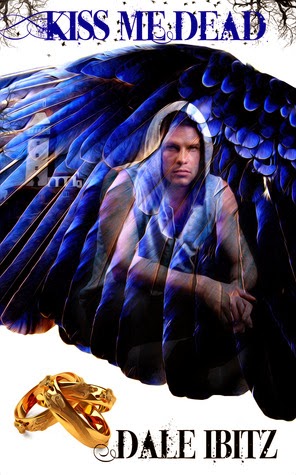
Purchase on Amazon
Kiss Me Dead is a great book that tells the stories of two characters-- a reaper and a girl who can see reapers. While, in some respects, it follows the paranormal formula, the beautiful writing really sets it apart. The stories are told in parallel, and intertwine in the present-day thread of the story, where the reaper enters the life of the girl. Romance and numerous questions follow. Can the guy be trusted? The answer is "probably not", which makes for an interesting tale as the two characters navigate through this strange relationship.
Dale Ibitz has a definite gift for description. As a person who appreciates writing for *writing*, I was just *wowed* by the beautiful use of language and fresh, interesting way she has of putting things across. From my perspective, that was the most awesome thing about this book. There are a lot of teen paranormal books out there, and only a few of them with writing anything like this.
Things that held me back (note that these are personal opinion):
- I just didn't *feel* the characters, especially the girl. She was kind of "meh" to me. I'm honestly not quite sure why I felt this way, because the character is fairly well-developed. I think maybe it was because she was kind of in-your-face, but then she didn't *do* much about it. And then she was also described as angelic, but I didn't see that shine through in her actions. I liked the reaper character better-- he was tragic and I *love* tragic characters.
- The other thing that bothered me was the insta-love. I personally need more from characters than a couple of meetings before they declare undying love. But then, I'm not a teenager, either. I don't imagine that the book's target audience will have a problem with this. So yeah, both of these things are just opinions and I doubt they would hold true for a lot of readers.
- The writing. I can't say this enough. Beautiful writing.
- The portrait of Giltine, goddess of death. She was awesome. Actually, the whole otherworld was awesome, but especially Giltine. Ibitz created this amazing visual of the goddess. I was frightened and intrigued. I wanted more of her, but she scared the hell out of me.
- This is related to the previous comment, but there was a freshness about some of this story that was great. Even some of the expected elements had a fresh take on them. Ibitz took the paranormal reaper thing and gave it her own spin so it is not just another paranormal book by any stretch.
- Tension-- sexual and otherwise. There are a lot of what-ifs and OMGs in this story. The characters obviously want to be together, but it looks like a really bad idea. And then you never know if the reaper is good or bad. For that matter, one of the supporting characters is also deliciously indiscernible. Bad guy? OK guy? Hell, even the goddess of death leaves you wondering. I definitely enjoyed that about the characters. Also, there are a lot of high stakes in the storyline. So yeah, tension. Tons of it.
Connect with Dale Ibitz

Website
Goodreads
Wednesday, 3 December 2014
A Rockin' Review of Anthem's Fall by S.L. Dunn

Purchase on Amazon
This book was recommended to us by a reader.
Anthem's Fall is like an intellectualized comic book. Crossing scientists with flying superhero-style aliens, it is surprising and interesting. The book focuses on ethical issues revolving around scientific discoveries and advancements, and then tests those stances by introducing an unexpected threat. It is both a moral, cautionary tale, and, well... something like a comic book.
I love comic books, so I was totally there from the beginning. However, having heard it was something like a comic book, I was surprised when the beginning read much more realistically. I thought it was very interesting how Dunn firmly grounded the book in the real world before introducing more unbelievable elements, and I think this lent gravity to the story that wouldn't have been there otherwise.
I was pretty sure that I knew where the story was going from not-that-far in. However, there were a number of surprises that kept me guessing. The story was well-written, and crafted beautifully. Dunn proves that he knows how to weave a story expertly.
As far as things I *didn't* like, they are mostly matter-of-opinion. I felt that the battle scenes were incredibly long. I was kind of like... "They're fighting *again*?" I wanted it to be over. In this respect, I'm going to be a bit sexist and say this is a "boy story". I wanted more personal-level interaction and more depth. Not to say that the characters were not well-done, but they were more intellectual than emotional. I like emotional. That is really the only place where the story fell short for me.
What rocked:
- The writing was great. Solid. Professional. I don't see a lot of writing of this quality in Indie books, to be honest. There were only a couple of typos.
- Twists. While I wouldn't exactly call these "plot twists", there were some cool reveals. One I loved in particular. Totally didn't see it coming.
- The epic feel of the disaster. Beautifully described. I felt like I was living part of the nightmare.
Connect with S. L. Dunn

Website
Goodreads
Subscribe to:
Posts (Atom)